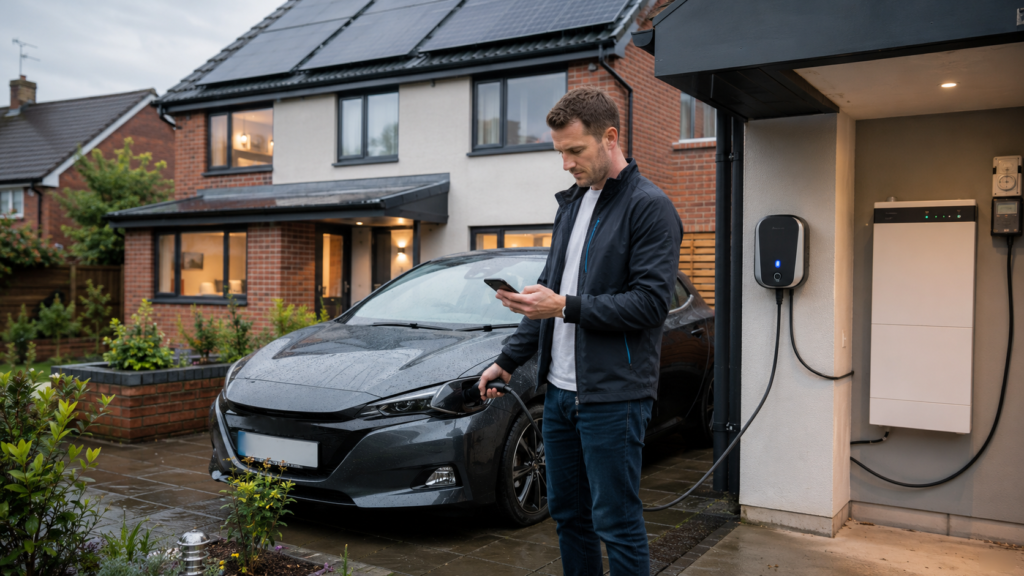
More UK homeowners are switching to electric vehicles and choosing the convenience of charging at home. But one important question often comes up during the planning stage: should you install battery storage alongside your EV charger?
A home battery can store surplus electricity generated by solar panels or cheaper electricity imported during off-peak hours for use later. However, battery storage is not automatically the right investment for every EV owner.
The answer depends on your solar generation, driving habits, electricity tariff, household consumption and when your vehicle is normally at home.
Is a Solar Battery Worth Adding to an EV Charger?
In short, battery storage may be worthwhile if you:
- Already have solar panels or plan to install them
- Generate excess solar energy while your EV is away
- Usually charge your car during expensive tariff periods
- Want to reduce your reliance on grid electricity
- Need a more flexible, future-ready home energy system
If your EV is regularly parked at home during sunny periods, charging it directly from solar panels may be more efficient than storing that electricity first. A battery becomes more valuable when your energy is generated and consumed at different times.
How Home Battery Storage Works With an EV Charger
A connected home energy system can direct electricity between four main areas:
- Your solar panels generate electricity.
- Your home uses the solar energy it needs.
- Surplus electricity charges your battery or EV.
- Any remaining energy may be exported to the grid.
When solar generation drops, the stored electricity can be used to power your home or contribute towards charging your vehicle.
This is the key difference:
- Direct solar charging sends available solar electricity straight to your EV.
- Battery-supported charging stores electricity first, allowing you to use it later.
According to the Energy Saving Trust, battery storage can hold excess solar electricity or cheaper off-peak energy for use when grid prices are higher.
Some energy is lost whenever electricity is stored and discharged, so direct solar charging is generally more efficient. Battery storage provides greater flexibility, but it should form part of a carefully designed energy strategy.
Benefits of Adding Battery Storage to Your EV Charger
Lower electricity costs
A battery can charge when electricity is cheaper or when your solar panels produce surplus power. That stored energy can then help reduce the amount of peak-rate electricity used by your home and EV.
Your actual savings will depend on your tariff, battery efficiency, solar output and charging routine.
Better use of your solar energy
Without battery storage, unused solar electricity may be exported to the grid. A solar battery and EV charger system gives you another option: store that energy and use it after sunset or when your vehicle returns home.
Remember that exported electricity may earn money through a Smart Export Guarantee tariff. A proper assessment should compare the value of exporting energy with the potential savings from storing it.
Reduced reliance on the grid
Battery storage can help your household use more of the electricity it generates. It will not necessarily take your home completely off-grid, but it can reduce exposure to peak prices and changes in energy tariffs.
Smarter charging
Combining a battery with a time-of-use tariff allows your system to import electricity during cheaper periods and reduce consumption during expensive ones.
Ofgem has highlighted that smart charging during periods of lower demand can help EV owners charge for less while supporting a more flexible electricity network.
Backup power, if designed for it
Some batteries can provide limited power during an outage, but this is not a standard feature of every installation. Backup operation usually requires compatible equipment and a dedicated emergency power supply or backup circuit.
Always confirm what will remain powered, for how long and whether EV charging is possible during an outage.
Choosing the Right EV Charger for Solar and Battery Systems
The best EV charger for solar and battery integration is not necessarily the most expensive model. It is the charger that works correctly with your solar inverter, battery, electricity supply and future energy plans.
Prioritise features such as:
- A dedicated solar-charging mode
- Compatibility with your inverter and battery system
- Dynamic load balancing
- Scheduled and off-peak charging
- Adjustable charging speeds
- Mobile app monitoring
- Access to live solar, battery and grid data
- Automatic prioritisation of renewable energy
- Over-the-air software updates
Dynamic load balancing is particularly useful because it adjusts the charger’s demand according to the electricity being used elsewhere in the home. This helps prevent the system from exceeding the property’s available electrical capacity.
Before selecting an EV charger compatible with solar and battery storage, ask whether all components can communicate properly. Having separate “smart” products does not guarantee that they will work together as one intelligent system.
Common Mistakes to Avoid
Installing for today only
Your energy demand could change if you buy a second EV, install a heat pump or expand your solar system. Planning these possibilities early can avoid expensive alterations later.
Choosing incompatible equipment
The battery, inverter, meter, energy-management system and EV charger must be assessed as a complete setup.
Undersizing the battery
A battery that is too small may run out before peak periods end. However, an oversized battery may never be fully used, increasing the cost without delivering equal value.
Ignoring your electricity tariff
Battery storage does not guarantee savings. Your installer should consider import rates, export payments and off-peak charging windows when estimating the financial benefit.
Focusing only on the cheapest quote
A low initial price may exclude important electrical work, monitoring, integration or after-sales support. Compare the proposed system design and expected performance—not only the equipment cost.
Why Choose Off Grid Group?
Off Grid Group provides complete solar, battery and EV charging solutions designed around how each household actually uses electricity.
We consider your current consumption, vehicle mileage, charging times, solar generation and future plans before recommending a system. This joined-up approach helps ensure your panels, battery and EV charger work together effectively.
From professional installation to ongoing support and maintenance, we create future-ready systems that can grow with your household.
Planning an EV charger, solar installation or home battery? Contact Off Grid Group for a tailored assessment and solution designed for your property.
Frequently Asked Questions
Can you charge an EV with a solar battery?
Yes. Stored electricity can contribute towards EV charging, provided the battery, inverter and charger are correctly integrated. The grid may supply any additional energy required.
Can you connect an EV charger to solar panels?
Yes. A solar-compatible smart charger can use available solar generation to charge an EV, although charging speed will depend on how much surplus electricity is available.
What is the best EV charger to use with solar panels and battery storage?
Look for solar charging modes, dynamic load balancing, scheduling, app monitoring and confirmed compatibility with your inverter and battery. The correct option depends on your wider energy system.
Is battery storage worth adding when installing an EV charger?
It can be worthwhile when you regularly produce surplus solar energy, charge during peak periods or want greater control over when you use grid electricity. A usage-based assessment is essential.
Can I add battery storage to my existing EV charger later?
Usually, yes. However, later integration may require changes to the inverter, metering or energy-management setup. Planning for a future battery during the charger installation can make expansion easier.
Does battery storage reduce EV charging costs?
It can reduce costs by storing surplus solar energy or cheaper off-peak electricity. Savings depend on tariffs, system efficiency and charging habits.
Can a home battery fully charge an electric car?
Most home batteries are considerably smaller than EV batteries, so one battery cycle will not usually provide a full vehicle charge. It can still supply a useful portion of the energy needed.
How much battery storage do I need for EV charging?
There is no universal size. The calculation should consider household consumption, daily EV mileage, charger output, solar generation, tariff periods and the amount of backup power required.